Review: Dark Cross Stitch Seamless Patterns for Business
As an embroidery designer who has spent years digitizing logos and creating custom assets for small businesses, I approach every new digital embroidery file with a critical eye. It is not just about whether a design looks pretty on a screen; it is about how it performs under the needle, how it translates to fabric, and ultimately, how it elevates a brand's identity. Recently, I evaluated the Dark Cross Stitch Seamless Patterns collection for potential use in commercial projects. My goal was to determine if these graphics could serve as more than just background noise—could they be the cornerstone of a cohesive merchandise strategy for cafes, boutiques, and creative studios?
First Impressions: A Blend of Rustic Charm and Modern Utility
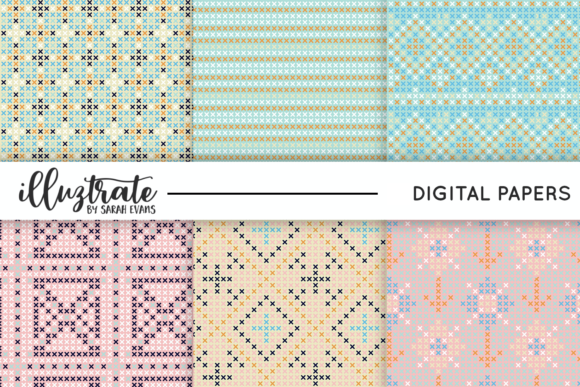
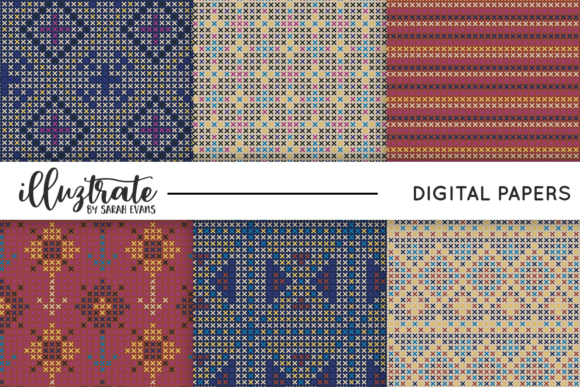
Upon reviewing the Dark Cross Stitch Seamless Patterns, the immediate visual impression is one of grounded elegance. The "dark" descriptor in the title suggests a sophisticated palette that moves away from the overly bright, primary colors often associated with traditional cross-stitch. Instead, these patterns feel mature, making them highly suitable for brands that want to convey a sense of heritage or artisanal quality without looking dated.
The description notes that these are digitally created using simple shapes for perfectly seamless results. From a designer's perspective, this is crucial. Simple shapes often translate better to embroidery than complex, photorealistic images because they reduce the risk of thread breaks and registration issues. The aesthetic strikes a balance between handmade product warmth and modern minimalism. For a local bakery or a florist, this vibe suggests care and attention to detail, which are key components of strong brand identity.
Real-World Application for Small Business Merch
The true test of any design asset is its versatility in real-world scenarios. I envision the Dark Cross Stitch Seamless Patterns working exceptionally well across various touchpoints for small business owners. Here is how I would deploy these graphics in a commercial setting:
- Embroidered Patches: These patterns are ideal for creating branded patches that can be sewn onto denim jackets, canvas backpacks, or tote bags. Because the design is seamless, it can be cropped to fit circular or rectangular patch shapes without losing visual integrity.
- Staff Uniforms and Aprons: For a coffee shop or boutique, adding a subtle pattern to the pocket of an apron or the sleeve of a work shirt adds a layer of professionalism. It distinguishes staff from customers while reinforcing the shop's aesthetic.
- Cap Embroidery: The simplicity of the shapes makes these patterns a strong candidate for cap fronts or side panels, provided the scale is adjusted correctly for the curved surface.
- Tote Bag Design: Canvas totes are a staple of small business merch. Using these patterns as an all-over print or a localized accent near the handles can turn a generic bag into a high-value customer gift.
- Product Packaging Accents: While primarily digital graphics, these patterns can be printed on tissue paper, stickers, or hang tags to create a unified unboxing experience that matches the embroidered elements of the brand.
Technical Considerations for Production
While the visual appeal is evident, moving from a digital graphic to a physical machine embroidery design requires technical diligence. As a designer, I have several specific notes for anyone planning to use these patterns for production.
First, consider the stitch density. Cross-stitch styles inherently rely on a grid structure. If the pattern is scaled down too small for a tiny chest logo or a pet collar tag, the stitches may become too dense, leading to a stiff, cardboard-like feel on the fabric. It is essential to test the design at the intended size before committing to a full run.
Second, pay close attention to thread colors and contrast. Since these are "dark" patterns, using black or navy thread on a dark garment might result in a loss of definition. I recommend testing the design in high-contrast combinations first—such as charcoal thread on a cream canvas—to ensure the geometric shapes pop. Conversely, for a subtle, tonal look on premium apparel, ensure the sheen of the thread provides enough differentiation from the base fabric.
Third, evaluate the hoop size requirements. Seamless patterns are often meant to tile. If you are embroidering a large area, such as the back of a jacket or a full tote panel, you must confirm that your machine's hoop size can accommodate the repeat or if you will need to re-hoop and align the design manually. Misalignment in seamless patterns is immediately noticeable and can ruin the professional look of the finished product.
Navigating Fabric Texture and Durability
The success of the Dark Cross Stitch Seamless Patterns also depends heavily on the substrate. These designs shine on stable, woven fabrics like cotton twill, denim, and canvas. However, caution is advised when applying them to textured fabrics like heavy fleece or pique knit, where the underlying texture might interfere with the crispness of the cross-stitch grid.
Furthermore, for items that require frequent washing, such as staff uniforms or kitchen aprons, the choice of stabilizer is non-negotiable. A cut-away stabilizer is usually recommended for garments that will undergo industrial laundering to prevent the design from puckering over time. Always create a printable mockup and a physical sample for client approval to demonstrate how the design holds up after a wash cycle.
Elevating Brand Identity and Customer Trust
In the crowded marketplace of Etsy sellers and local creatives, consistency is king. Utilizing a cohesive set of design assets like the Dark Cross Stitch Seamless Patterns helps build instant recognition. When a customer sees the same elegant pattern on your website, your packaging, and your embroidered tote bag, it signals a well-thought-out business.
This visual consistency fosters trust. It tells the customer that you care about the details, which often translates to a perception of higher product value. For handmade brands, this is particularly effective; it bridges the gap between "crafty" and "commercial grade," allowing makers to charge premium prices for their custom apparel and goods.
Final Verdict and Designer Recommendations
The Dark Cross Stitch Seamless Patterns offer a versatile foundation for small business branding. They are stylish, adaptable, and carry the right amount of artisanal weight to appeal to modern consumers. However, before integrating them into your commercial embroidery workflow, I strongly advise the following steps:
- Verify Licensing: Ensure the license terms explicitly allow for commercial use on physical goods for resale. Do not assume; read the fine print.
- Check File Formats: Confirm that the download includes the specific embroidery file formats compatible with your machines (e.g., PES, DST, EXP) or if you need to digitize the vector graphics yourself.
- Test Scale and Spacing: Run a stitch-out on scrap fabric identical to your final product to check spacing and thread coverage.
- Compare Assets: Place these patterns beside your existing logo and fonts to ensure they complement rather than compete with your primary branding elements.
By treating these graphics as strategic tools rather than mere decorations, small business owners can leverage the Dark Cross Stitch Seamless Patterns to create memorable, high-quality merchandise that stands out in the market.